
Water damage rarely happens at a convenient time. A burst pipe, overflowing appliance, storm, roof leak, or unexpected flooding can affect flooring, drywall, insulation, furniture, and structural materials within a short period. When moisture continues spreading through a property, delaying cleanup can make restoration more complicated. Professional 24/7 water damage restoration in Blythe, GA gives homeowners and businesses access to emergency assistance when water-related problems cannot wait for normal business hours.
Blount’s Disaster Restoration provides emergency restoration services throughout the greater CSRA. Its official website identifies the company as an IICRC-certified disaster restoration contractor offering water damage restoration, fire and smoke restoration, mold remediation, structural drying, and emergency services. The company also specifically advertises 24/7 emergency service.
Act Quickly After Discovering Water Damage
The first priority after water enters a property is preventing additional exposure when it is safe to do so.
If the source is a plumbing problem and you can safely shut off the water, doing so may help limit continued damage. For larger flooding, electrical concerns, contaminated water, or structural damage, avoid entering unsafe areas.
Professional restoration should begin with evaluating where the water came from, how far it traveled, and which materials have been affected.
Blount’s Waynesboro-focused restoration content notes that water damage may result from plumbing leaks, appliance failures, storms, and flooding. Its restoration process emphasizes removing water and beginning drying before moisture spreads further.
Understand the Difference Between Removal and Drying
Removing standing water is only the first part of restoration.
Water can move beneath flooring, behind drywall, into insulation, and through other building materials. A room may appear dry at the surface while hidden areas still contain significant moisture.
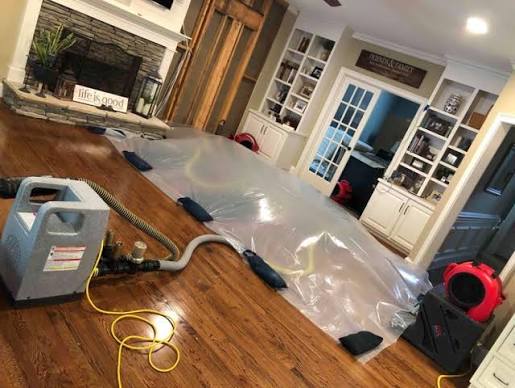
Professional water damage restoration in Blythe, GA may therefore include water extraction followed by structural drying and dehumidification.
Blount’s restoration services include complete water restoration and rapid structural drying. Its published restoration information also describes using professional extraction, air-moving, dehumidification, and moisture-detection equipment to address water that may not be visible from the surface.
What Happens During Emergency Water Mitigation?
Water mitigation focuses on controlling the immediate problem and limiting additional property damage.
The exact process depends on the source and severity of the loss, but professional service may involve:
- Inspecting affected areas
- Identifying the water source
- Removing standing water
- Extracting moisture from surfaces
- Setting up professional drying equipment
- Using dehumidifiers
- Monitoring moisture levels
- Removing materials that cannot be saved
- Cleaning affected areas
- Planning necessary repairs
Blount’s Disaster Restoration provides emergency water mitigation along with restoration and reconstruction services, allowing damaged properties to move from initial stabilization into repair when needed.
Why Structural Drying Matters
Drying should continue until affected materials reach appropriate moisture levels rather than stopping simply because surfaces feel dry.
Professional restorers may use air movers to increase airflow and commercial dehumidifiers to remove moisture from the surrounding environment.
Blount’s published water restoration guidance explains that structural drying targets moisture inside walls, floors, and ceilings and that technicians monitor conditions using moisture-measuring equipment.
This monitoring helps restoration professionals determine whether hidden areas are continuing to dry as expected.
Water Damage From Burst Pipes and Plumbing Leaks
A plumbing failure can release a substantial amount of water before the problem is discovered.
Burst supply lines, leaking appliances, overflowing fixtures, and hidden plumbing leaks may affect multiple building materials, particularly when the property is unattended.
Blount’s Disaster Restoration lists burst pipes and plumbing failures among the situations handled by its emergency water mitigation services.
After stopping the water source, the restoration team can evaluate how far moisture has traveled and determine what extraction and drying work is necessary.
Why 24/7 Restoration Availability Matters
Water damage does not follow normal office hours.
A pipe can burst overnight, a storm can cause water intrusion during the weekend, or flooding can occur while a business is closed.
Blount’s official website specifically lists 24/7 emergency service in Blythe, while its restoration division states that it is available 24 hours a day for disaster restoration needs.
Emergency availability allows property owners to begin the assessment and mitigation process without intentionally waiting until the next regular business day.
Choosing a Water Damage Restoration Company
When comparing restoration contractors, consider whether the company can manage both the immediate moisture problem and the repairs that may follow.
Useful capabilities include emergency response, water extraction, structural drying, moisture detection, mold remediation, reconstruction, and experience with insurance-related restoration.
Blount’s official site identifies the company as an IICRC-certified disaster restoration contractor and an insurance repair specialist. It provides water damage restoration, fire restoration, mold remediation, emergency services, and construction throughout the greater CSRA.
Conclusion
Professional 24/7 water damage restoration in Evans, GA can help stabilize a property after burst pipes, plumbing failures, storms, appliance leaks, or flooding. Effective restoration involves more than removing visible water. Extraction, moisture detection, structural drying, dehumidification, monitoring, cleaning, and reconstruction may all become part of the recovery process.
Blount’s Disaster Restoration provides 24/7 emergency restoration along with water damage mitigation, structural drying, mold remediation, and reconstruction services. Its Waynesboro restoration content specifically addresses local water damage cleanup and recovery needs.
FAQs
Does Blount Disaster offer 24/7 water damage restoration?
Yes. Blount’s official website specifically advertises 24/7 emergency service, and its restoration division states that emergency restoration help is available 24 hours a day.
What causes water damage in Waynesboro homes?
Common causes include burst pipes, plumbing leaks, appliance failures, flooding, roof leaks, and storm-related water intrusion.
What is structural drying?
Structural drying uses professional airflow, dehumidification, and moisture monitoring to remove water from affected building materials such as walls, flooring, and ceilings.
Can hidden moisture remain after standing water is removed?
Yes. Water can remain behind walls, under flooring, and inside other building materials even after visible water has been extracted.
Does Blount Disaster handle mold after water damage?
Yes. Mold remediation and removal are among Blount’s verified disaster restoration services.