
Need flood damage restoration in Grovetown GA? Learn what restoration involves, how much it costs, and how to find the right local contractor fast.
Flooding changes a home fast. What looks like wet floors and damp walls on the surface is almost always more than that — water that has moved under baseboards, soaked into framing, saturated insulation, and potentially contaminated materials that now pose health concerns. For Grovetown homeowners dealing with flooding from heavy rain, a sewer backup, or a plumbing system failure, the decisions made in the first few hours after the event determine a great deal about how the recovery unfolds.
Grovetown sits in Columbia County west of Augusta, and the community has grown significantly over the past decade. Newer subdivisions have well-maintained infrastructure, but Columbia County also receives substantial rainfall — averaging over 43 inches annually — and the clay-heavy soils here don’t absorb water quickly. Flash flooding events, storm drain overflows, and basement water intrusion are all genuine risks that Grovetown homeowners encounter.
We work with Grovetown families through flood damage events regularly. At Blount’s Disaster Restoration, we see the same patterns — families who called us within a few hours of discovering the flood consistently come through the restoration with less damage, lower total costs, and faster recovery than those who waited. This guide gives you the practical knowledge to understand what professional flood damage restoration involves and what to do when it matters most.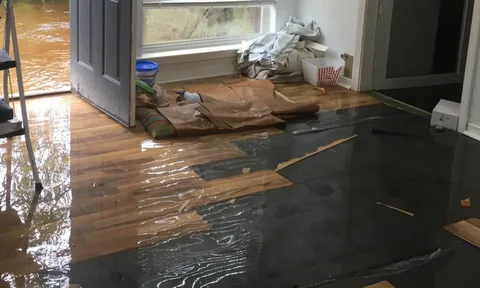
Why Flood Damage in Grovetown Spreads Faster Than Homeowners Expect
The most common misconception about flood damage is that the problem stops when the visible water is gone. That’s when the hidden part of the problem is often just beginning.
Water that enters a home during a flooding event moves through the structure quickly. It wicks up into drywall from the bottom, travels along floor joists and subfloor framing, soaks into wall insulation, and pools under flooring materials where it sits in contact with organic materials. In Columbia County’s warm, humid summers, the conditions for mold growth in those wet materials can develop within 24 to 48 hours of the initial flooding.
Floodwater itself — whether from stormwater, a sewer backup, or an overflowing drainage system — is typically Category 2 or Category 3 water in restoration terminology. Category 2 contains some level of contamination from non-sewage sources. Category 3 includes sewage contact, groundwater contamination, or long-standing water that has undergone significant biological activity. These contamination categories affect how restoration must be approached, what materials can be dried in place versus removed, and what safety protocols the restoration crew must follow.
According to the Environmental Protection Agency, mold can begin growing on wet building materials within 24 to 48 hours under warm, humid conditions — and the Augusta area’s summer climate provides exactly those conditions. For Grovetown homeowners, acting quickly isn’t optional — it directly affects whether restoration is a restoration or a major reconstruction project.
The Federal Emergency Management Agency’s flood damage research also documents that delayed professional response consistently results in significantly higher total restoration costs compared to events where professional extraction and drying begin within the first 24 hours. Getting a professional restoration team on-site the same day flooding is discovered is the most financially sound response, not the most conservative one.
What Flood Damage Restoration Actually Covers
Professional flood damage restoration is not just drying and cleaning. It covers a coordinated sequence of steps that each build on the previous one, and skipping or rushing any of them affects the quality of the final result.
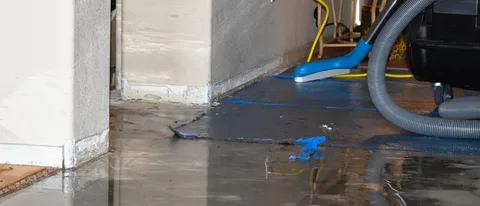
Emergency water extraction removes standing water and surface saturation immediately using industrial-grade extractors. This is where the professional equipment advantage is most dramatic — a truck-mounted extractor removes water at a rate that consumer equipment cannot approach, and getting water out of building materials in the first few hours limits how deeply moisture penetrates into walls, floors, and structural framing.
Moisture mapping identifies the full extent of moisture penetration using professional meters and thermal imaging cameras. Water doesn’t stay where it lands — it travels, and moisture mapping is what reveals where it actually went. Wall cavities and subfloor assemblies that feel dry on the surface often show elevated moisture readings inside the structure.
Structural drying uses commercial air movers and dehumidifiers positioned based on the moisture mapping data. Equipment runs continuously for several days, and a technician monitors moisture readings in the affected materials daily to confirm drying is progressing as expected and to adjust equipment positioning as needed.
Contamination assessment and treatment addresses the health risk that comes with Category 2 and Category 3 floodwater. Affected surfaces receive antimicrobial treatment, and materials that cannot be adequately decontaminated — saturated drywall, carpet, padding, insulation — are removed rather than dried in place.
Documentation throughout the process creates the record that supports the insurance claim. Photographs, moisture readings, equipment logs, and written scope records all protect the homeowner if any dispute arises about what was damaged and what was done.
Types of Flooding That Cause Damage in Grovetown GA
Different flooding events create different restoration challenges, and understanding the type of flooding helps set realistic expectations for scope and timeline.
| Flood Type | Water Category | Primary Concern | Restoration Scope |
| Heavy rain / stormwater intrusion | Category 2-3 | Contamination, soil-borne pathogens | Decontamination + full drying |
| Sewer backup | Category 3 | Sewage contamination, bacteria | Full decontamination, material removal |
| Supply line burst | Category 1 | Clean water, fast spread | Extraction + structural drying |
| Appliance overflow | Category 1-2 | Subfloor and wall penetration | Extraction, drying, limited removal |
| Basement water intrusion | Category 2 | Ongoing moisture source | Source fix + full drying |
| Flash flood event | Category 3 | Multiple contamination sources | Full decontamination protocol |
Homeowners looking for best water restoration contractors in Grovetown GA should ask any contractor they’re considering specifically how they classify the water category of the event and what protocols they follow for each category. A contractor who treats all flood events the same way regardless of water source is not applying the restoration science correctly.
What Flood Damage Restoration Costs in Grovetown GA
Understanding realistic cost ranges protects you from both overpriced proposals and bids that seem attractive because they leave out important scope.
A minor flood event — a limited appliance overflow or a supply line leak caught within a few hours — typically runs between $1,500 and $4,000 for professional restoration. This covers extraction, structural drying, daily monitoring, limited material removal where necessary, and antimicrobial treatment.
Flood damage restoration in Grovetown GA for a moderate event — a basement that took in water during a storm, a sewer backup that affected part of the ground floor, or a supply line failure that saturated multiple rooms — generally runs between $5,000 and $12,000 depending on the square footage affected, the water category, and the extent of material removal required.
Significant events — whole-home flooding, extended sewer backup with wide contamination spread, or events where delayed response allowed mold to establish before professional drying began — can run from $15,000 to $40,000 or more when full material removal and reconstruction are needed. These ranges reflect professional-standard work with proper documentation, daily monitoring, and appropriate decontamination for the water category involved.
How to Respond in the First Hours After Grovetown Flooding
What you do in the first few hours after discovering flooding shapes the entire recovery. Here is what matters most in that window.
Do not re-enter a flooded area if there is any possibility of electrical hazards. Water and electricity in combination create life-threatening risks. If there is any chance electrical circuits in the flooded area are energized, wait for the power to be confirmed off before entering.
Once safe to enter, document everything before touching or moving anything. Photographs and video of every affected room, every water line, every damaged item — taken before any cleanup begins — are your insurance evidence. This documentation is what makes a strong claim, and you cannot recreate it after the fact.
Contact your insurance company promptly to start the claims process. Most policies require notification soon after a covered loss, and starting the claim before cleanup begins protects your coverage.
Call a professional flood damage restoration company immediately after contacting your insurer. The 24 to 48-hour window for limiting mold growth and structural damage is real, and every hour of delay in professional extraction reduces what can be saved and increases what needs to be replaced.
Do not run household fans over wet surfaces without professional dehumidification equipment in place. Moving air over wet materials without humidity control spreads moisture to adjacent dry areas rather than removing it, which can expand the damage area rather than reducing it.
Choosing the Right Flood Damage Restoration Contractor in Grovetown GA
The IICRC (Institute of Inspection Cleaning and Restoration Certification) sets the professional standards for flood and water damage restoration work. The WRT (Water Restoration Technician) credential indicates training in the standards and procedures that complete, professional restoration requires. Ask any contractor about their IICRC certifications before committing to any work.
Twenty-four hour emergency availability is a practical requirement, not just a convenience. Flood damage doesn’t wait for business hours, and a contractor who can have extraction equipment on-site within a few hours of your call produces materially better outcomes than one whose earliest availability is the next morning.
Insurance documentation capability matters directly for your claim outcome. A restoration contractor with experience preparing documentation in the format adjusters use, submitting supplemental claims when additional damage is discovered during work, and communicating effectively with adjusters produces better claim settlements than those without that experience.
Ask specifically about their daily moisture monitoring process and what documentation they provide at the end of the project. Written moisture logs from start to completion, a final report confirming materials have reached target dryness levels, and photographs of the work throughout are what professional documentation looks like. A contractor who can’t describe this process clearly is not operating to professional standards.
Closing Thoughts
Flood damage restoration in Grovetown is a time-sensitive process where early professional response, correct contamination protocols, and thorough drying documentation all work together to produce a lasting recovery rather than a temporary fix. Georgia’s climate doesn’t give wet materials time to dry on their own, and the combination of warmth, humidity, and organic building materials creates mold risk that develops faster here than in drier parts of the country.
For any homeowner in Grovetown who has experienced flooding or suspects water damage from any source, the most financially sound response is getting a professional assessment quickly — before the damage scope grows and the recovery options narrow.
Blount’s Disaster Restoration serves Grovetown and the surrounding Columbia County area with professional flood damage restoration including 24-hour emergency response, full moisture documentation, and complete insurance claim support. Call us today for a free assessment.
FAQs
How quickly do I need to call for flood damage restoration in Grovetown GA? As quickly as possible — the same day flooding is discovered if at all possible. Georgia’s warm, humid climate creates mold growth conditions within 24 to 48 hours in wet structural materials. Every hour that water sits in contact with walls, floors, and framing increases how deeply moisture penetrates and how much material will ultimately need to be removed. Professional extraction equipment removes water at a rate that dramatically limits that penetration when deployed quickly. For Category 3 flooding — sewage, contaminated stormwater, or floodwater — the contamination risk makes immediate professional response even more urgent. Most professional restoration companies offer 24-hour emergency response specifically because response time has a direct and measurable effect on both the scope of the restoration and the total cost.
Does homeowner’s insurance cover flood damage in Grovetown GA? Standard homeowner’s insurance in Georgia covers sudden and accidental water damage from internal sources — burst pipes, appliance failures, and roof leaks caused by covered storm events. What standard policies exclude is flooding from external water sources — rising groundwater, stormwater overflow, or river flooding — which requires a separate flood insurance policy, typically through FEMA’s National Flood Insurance Program or a private flood insurer. Sewer backup coverage is an optional endorsement on most policies and is not included in standard coverage. If you’re uncertain what your policy covers for a specific event, contact your insurer and start a claim before any cleanup begins — an adjuster’s determination is the definitive answer for your policy. Document everything thoroughly before any materials are moved or removed.
What is Category 3 water and why does it require different treatment than a standard water leak? Water damage is classified into three categories based on contamination level. Category 1 is clean water from a supply line or fresh rainwater — the lowest health risk. Category 2 is gray water with some contamination — washing machine discharge, toilet overflow without feces, or mild stormwater. Category 3 is black water — sewage backup, floodwater that has contacted ground surfaces, or any water that has been standing long enough to develop significant biological activity. Grovetown flooding events from stormwater or sewer backup almost always produce Category 3 conditions. Category 3 restoration requires personal protective equipment for the crew, removal of porous materials that contacted the water rather than drying them in place, antimicrobial treatment of all structural surfaces, and specific disposal protocols for contaminated materials. A contractor who treats a Category 3 event the same as a clean water leak is not providing safe or complete service.
How long does flood damage restoration take in Grovetown GA? The extraction and structural drying phase for a standard flood event typically takes three to seven days with professional equipment in place and daily moisture monitoring. Larger events or situations where response was delayed allow moisture to penetrate more deeply, extending drying time. Category 3 events require additional time for decontamination work before standard drying begins. Reconstruction — replacing drywall, flooring, insulation, and other removed materials — begins after drying is confirmed complete and adds additional time depending on scope. A limited single-room event can often be fully restored within two to three weeks. A significant event involving multiple rooms, contamination cleanup, and substantial reconstruction can take six to ten weeks from first response to final completion.
Can I handle flood cleanup myself in Grovetown GA to save money? For very small, clean water events — a minor appliance leak caught within an hour, limited to a small area of hard flooring — limited self-cleanup as a temporary measure while arranging professional help may be reasonable. For any event involving significant standing water, Category 2 or 3 contamination, water that contacted walls or subfloor, or flooding that was present for more than a few hours, professional restoration is genuinely necessary rather than just convenient. Moisture meters consistently find elevated readings inside wall assemblies and under floors in areas that appear completely dry visually — and those hidden moisture readings are where mold growth begins. Self-dried flood events that leave residual moisture in structural materials produce mold problems months later that cost far more to address than professional restoration on day one would have.